


Organizing Your Homeschool Day: A Simple Guide to Peace and Productivity
Updated: Nov 15, 2025
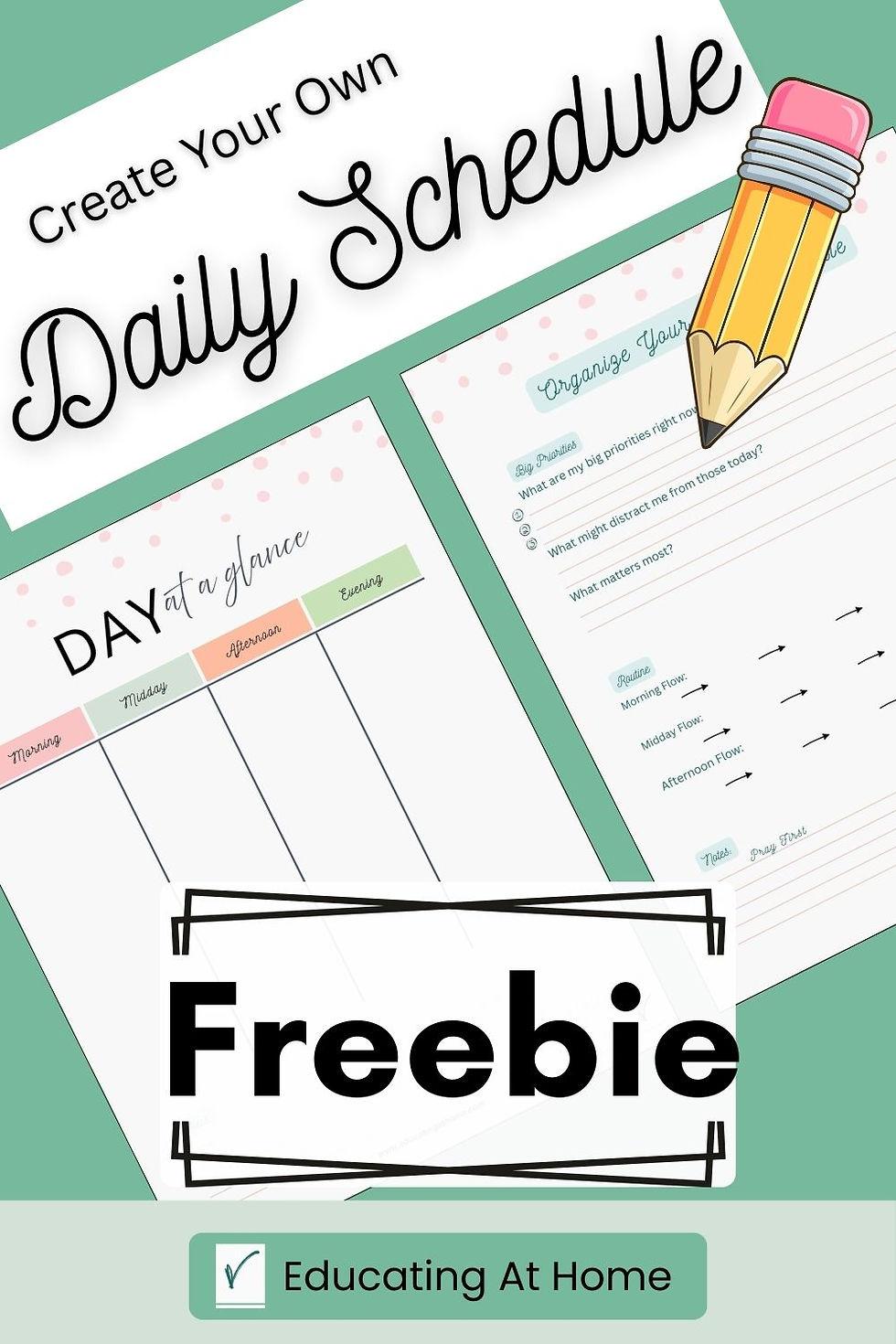
Homeschooling doesn’t have to look like a traditional classroom. In fact, it often works best when you design your day to match your family’s natural rhythm. Here are five simple steps to help you organize your homeschool day and use a daily homeschool schedule that brings peace instead of stress.
I have always loved schedules and weekly organization strategies. However, every year, the process changes a bit depending on our family's current commitments. Therefore, organizing our days will look different for each season.
1. Start with Your Big Priorities
Before diving into schedules and checklists, ask yourself: What matters most in our homeschool right now? Maybe it’s consistent math practice, more time for reading aloud, or slowing down to enjoy nature studies.
When you know your top 2–3 priorities, it’s easier to say yes to what fits and no to what distracts. This clarity can help you focus your energy where it counts the most.
2. Create a Gentle Homeschool Daily Routine
Instead of thinking in rigid blocks of time, consider homeschool daily routines. For example:
Morning: read-aloud + Bible + math
Midday: writing + grammar + lunch
Afternoon: history or science + free reading
This way, if math takes 20 minutes one day and 50 the next, you’re not “behind”—you’re just following your flow. Embrace the flexibility!
3. Use a Printable Homeschool Daily Schedule that Fits Your Style
Some moms love detailed homeschool lesson planners, while others prefer a simple one-page daily checklist. I’ve been both, depending on the season! Try out a few printable homeschool daily schedules until you find what feels right.
Hint: I’ve created a free daily schedule printable you can download to test-drive what works for you.
Download Your Freebie
4. Build in Breathing Space aka Margin
Life happens—laundry piles up, toddlers need snacks, or the dog decides to eat your spelling list. Instead of fighting it, build margin into your homeschool schedule. Keep lessons a little shorter, and leave time in the afternoons for catching up or just enjoying life together.
This breathing space can be a game-changer. It allows you to adapt to unexpected events without feeling overwhelmed.
5. End with Connection
One of my favorite habits is ending the homeschool day with something light and joyful: a read-aloud, a nature walk, or even a quick game. It reminds my kids (and me) that learning is more than worksheets—it’s about growing together.
Final Encouragement
Homeschooling doesn’t have to be complicated. With a few simple steps and a flexible daily homeschool schedule, you can organize your day in a way that works for your family. Remember—there’s no one “right” way, only the way that helps your kids learn and keeps your family’s peace.
Ready to get started? Grab my free Homeschool Daily Schedule Printable and design your day with confidence.
Additional Tips for a Successful Homeschool Experience
Incorporate Fun Learning Activities
Learning can be fun! Incorporate games, crafts, and hands-on activities into your daily routine. This keeps kids engaged and makes learning feel less like a chore.
Set Realistic Goals
It’s important to set achievable goals for your homeschool day. Don’t overload your schedule. Instead, focus on quality over quantity.
Stay Flexible
Flexibility is key in homeschooling. If something isn’t working, don’t hesitate to change it up. Your schedule should serve your family, not the other way around!
Connect with Other Homeschoolers
Reach out to other homeschooling families for support and ideas. Sharing experiences can provide new insights and inspiration.
Celebrate Achievements
Take time to celebrate your children’s achievements, no matter how small. This boosts their confidence and encourages a love for learning.

Arika


Comments